
Connecting Renewable Energy, Mechanical Infrastructure, and Innovative Financing
Commercial buildings face an increasingly complex energy landscape. Rising operating costs, aging mechanical equipment, and growing interest in energy efficiency are encouraging property owners to evaluate new ways to modernize their facilities while managing capital expenditures.
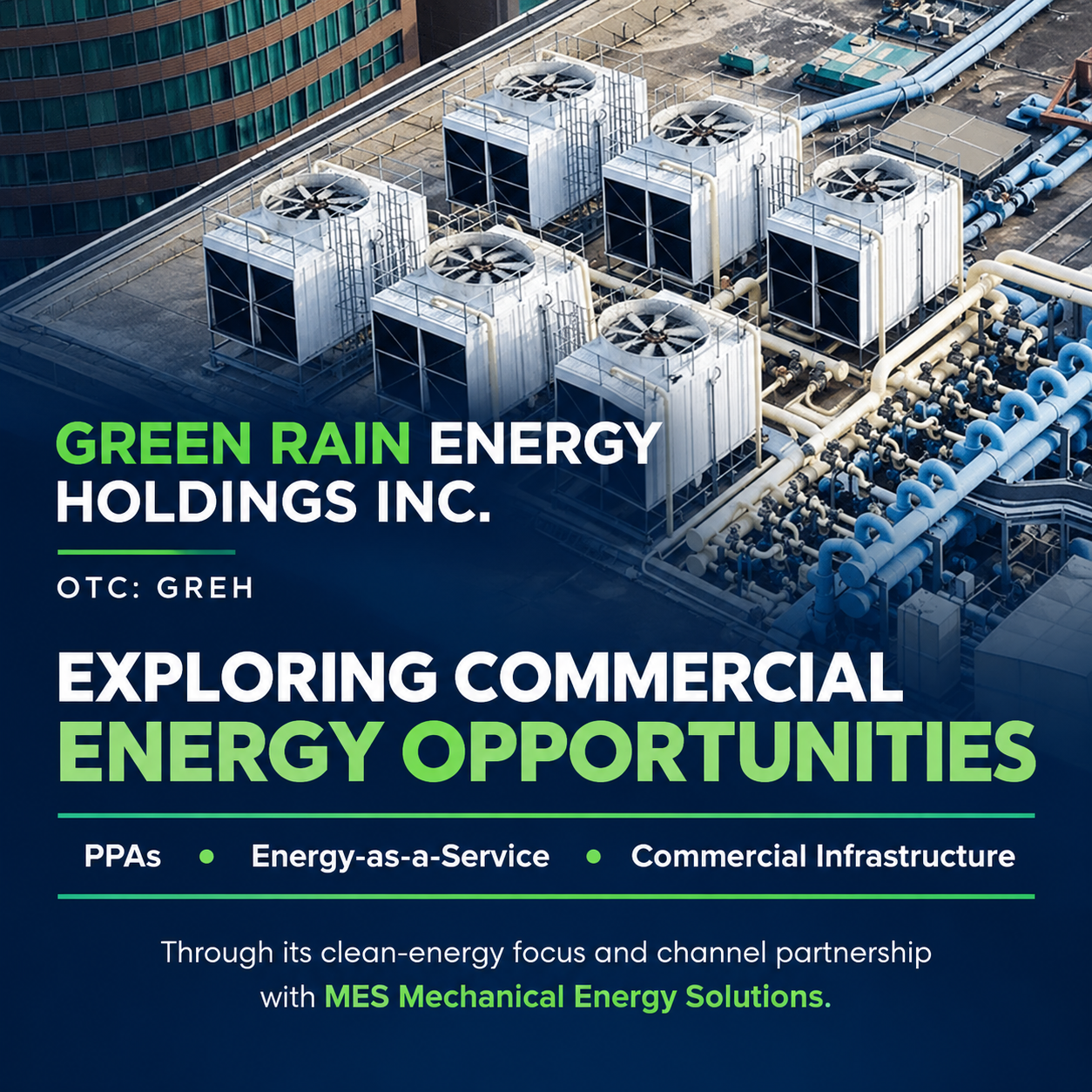
Green Rain Energy Holdings Inc. (OTC: GREH), through its clean-energy focus and channel partnership with MES Mechanical Energy Solutions, is examining the broader opportunities presented by commercial energy infrastructure, Power Purchase Agreements (PPAs), and Energy-as-a-Service models.
This market combines several important areas: renewable electricity generation, efficient heating and cooling systems, building automation, and financing structures that may help qualifying businesses implement energy improvements.
The Role of Power Purchase Agreements
A Power Purchase Agreement is generally a contract under which a customer purchases electricity generated by an energy system owned and operated by a third-party developer.
In a typical solar PPA, the developer arranges the installation and operation of a solar energy system, while the customer purchases the electricity generated under agreed terms. Depending on the arrangement, this approach may reduce the customer’s upfront capital requirements and provide greater visibility into a portion of future electricity costs.
The U.S. Department of Energy’s Better Buildings & Better Plants Initiative identifies PPAs as one financing option for eligible energy-generation projects.
Reference: https://
While conventional PPAs are primarily associated with electricity generation, the commercial energy market also offers other contractual structures for financing equipment, improving efficiency, and delivering energy-related services.
Why Mechanical Energy Systems Matter
Heating, ventilation, and air conditioning systems can represent a significant component of energy consumption in commercial properties. Hotels, offices, healthcare facilities, retail centers, and industrial buildings rely on mechanical infrastructure to maintain comfortable and functional operating environments.
Modernizing these systems may create opportunities to improve efficiency, provided the technology is appropriate for the facility and supported by sound engineering.
Potential areas of improvement include:
High-efficiency chillers and central plants: Modern chillers, pumps, boilers, and cooling towers can help improve the performance of central heating and cooling systems.
Variable-frequency drives: These devices allow compatible motors to adjust their speed to changing demand, potentially reducing unnecessary energy consumption.
Advanced air-handling and ventilation: Properly designed air-handling units and demand-controlled ventilation systems can better match airflow to occupancy and building requirements.
Building automation: Integrated controls can coordinate HVAC equipment, sensors, lighting, and operating schedules to help identify and address inefficiencies.
Heat pumps and distributed thermal systems: Depending on the facility, heat pumps and variable refrigerant flow systems may offer alternatives to conventional heating and cooling equipment.
These technologies must be evaluated individually. Their benefits depend on building conditions, equipment selection, operating schedules, energy prices, installation quality, and maintenance.
The Channel Partnership With MES Mechanical Energy Solutions
The channel partnership between Green Rain Energy Holdings and MES Mechanical Energy Solutions creates a framework for exploring potential opportunities at the intersection of commercial energy, mechanical systems, and building infrastructure.
Mechanical energy projects often require specialized knowledge of equipment performance, building loads, system integration, and ongoing operational requirements. A channel-partner relationship can provide a pathway for identifying relevant opportunities and evaluating how different energy solutions and financing approaches may fit commercial applications.
Potential areas for evaluation include mechanical system modernization, building energy efficiency, and alternative contractual structures for qualifying projects.
The specific scope of any project will depend on technical assessments, customer requirements, commercial negotiations, and the parties’ agreed responsibilities.
Understanding Energy-as-a-Service
Energy-as-a-Service describes a range of arrangements in which customers obtain energy-related services without necessarily purchasing and managing all associated equipment themselves.
Depending on the contract, a provider may finance, install, operate, or maintain specified systems. Payments may be based on delivered energy, equipment availability, measured performance, or other agreed criteria.
For commercial property owners, possible advantages include reduced initial capital requirements, defined service responsibilities, and access to specialized equipment or operational expertise.
However, these structures are not automatically less expensive than direct equipment purchases. Businesses must consider total contract costs, maintenance obligations, performance guarantees, termination provisions, and potential minimum-payment commitments.
An HVAC modernization project may require an energy-services agreement, equipment lease, or performance contract rather than a conventional electricity PPA.
Evaluating Projects From Both Technical and Financial Perspectives
Successful commercial energy projects require more than selecting efficient equipment or obtaining financing.
A comprehensive evaluation should consider:
- Energy consumption: Understanding hourly, daily, and seasonal demand.
- Equipment performance: Assessing existing systems and identifying appropriate improvements.
- Project economics: Comparing upfront costs, operating expenses, projected savings, and contractual payments.
- Maintenance: Defining responsibility for servicing equipment and correcting performance problems.
- Measurement: Establishing how energy delivery and system performance will be monitored.
- Regulatory requirements: Reviewing applicable utility, permitting, contractual, and other legal considerations.
These factors help determine whether a proposed project is technically practical and financially appropriate.
Green Rain Energy Holdings’ Broader Clean-Energy Focus
Green Rain Energy Holdings Inc. (OTC: GREH) has stated areas of focus that include urban rooftop solar installations and grid-connected power solutions through its subsidiary, Green Rain Development.
The company’s channel partnership with MES Mechanical Energy Solutions adds context to its exploration of potential commercial energy opportunities involving mechanical infrastructure and building efficiency.
More broadly, renewable electricity generation and building efficiency can address different parts of a property’s energy profile. Solar systems can generate electricity, while HVAC improvements and building controls can influence how efficiently a facility uses energy.
Where appropriate, evaluating these elements together may help property owners consider a more integrated approach to energy planning.
The feasibility of each opportunity depends on project-specific engineering, financing, customer requirements, and applicable regulations. The existence of a channel partnership does not, by itself, establish that a project has been awarded, financed, or completed.
Conclusion
The commercial energy market continues to present opportunities to evaluate renewable generation, mechanical infrastructure improvements, and alternative financing arrangements.
Through its channel partnership with MES Mechanical Energy Solutions, Green Rain Energy Holdings is exploring the potential intersection of these areas as part of its broader clean-energy focus.
Power Purchase Agreements and Energy-as-a-Service models may be appropriate for certain projects, but the right structure depends on the technology involved, the facility’s energy requirements, and the overall economics.
For more information about Green Rain Energy Holdings Inc. and its clean-energy focus, visit https://greenrainenergy.com.
Company: Green Rain Energy Holdings Inc. (OTC: GREH)
Channel Partner: MES Mechanical Energy Solutions
Website: https://greenrainenergy.com