

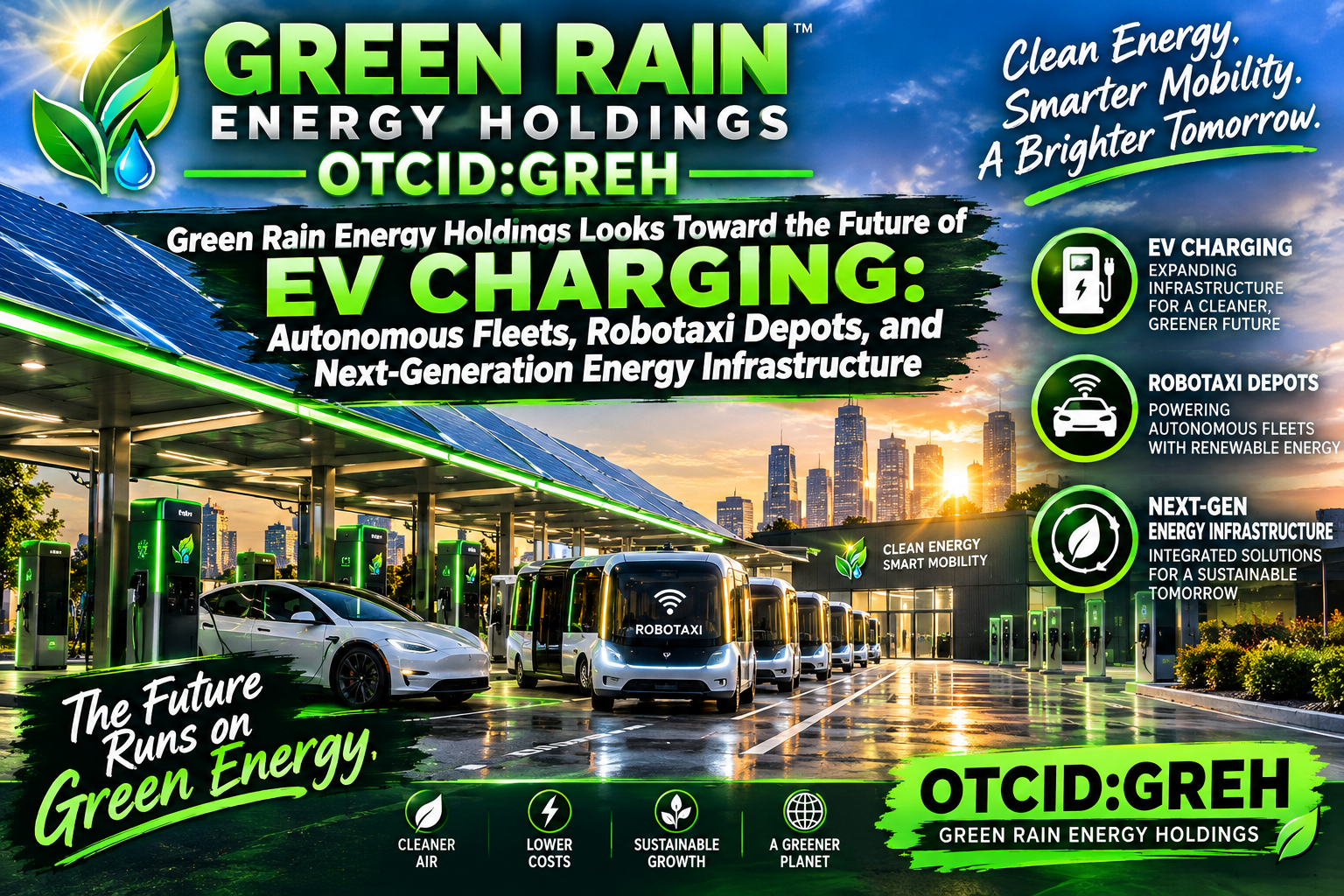
Green Rain Energy Holdings Looks Toward the Future of EV Charging: Autonomous Fleets, Robotaxi Depots, and Next-Generation Energy Infrastructure
The Next Phase of Electrification Could Extend Far Beyond Traditional Charging Stations
The electric vehicle revolution is entering a new phase. While much of the industry’s early attention focused on consumer EV adoption and public charging stations, the next wave of opportunity may increasingly center on commercial fleet infrastructure, autonomous vehicles, robotaxi services, and large-scale charging facilities designed to keep vehicles operating throughout the day.
Green Rain Energy Holdings (OTCID: GREH), together with its channel partners, including MES Mechanical Energy Solutions, recognizes the potential significance of this transition. As transportation companies explore new operating models and expand their electric vehicle strategies, the demand for reliable, scalable, and strategically located energy infrastructure could create opportunities across the EV ecosystem.
The Company’s market outlook reflects a broader industry trend: the future of electric transportation will require more than vehicles and charging plugs. It will require an integrated infrastructure capable of supporting the energy, equipment, and operational demands of increasingly electrified transportation networks.
1. Autonomous Vehicle Depots Could Reshape EV Infrastructure
Autonomous vehicles and robotaxi services introduce a different set of infrastructure requirements than traditional personal transportation.
Privately owned EVs may spend hours parked at homes, workplaces, or public destinations. Commercial autonomous fleets, by contrast, could be expected to operate for extended periods, returning to charging facilities as needed to maintain availability and meet customer demand.
This creates potential demand for dedicated charging depots equipped with high-capacity direct-current fast chargers, electrical distribution systems, energy management technology, and space for vehicle staging and servicing.
Industry investment in dedicated charging hubs is an indication of where parts of the transportation market may be heading. Facilities that combine charging with cleaning, inspections, maintenance coordination, and fleet turnaround could help operators reduce downtime and improve vehicle utilization.
For Green Rain Energy Holdings and its channel partners, these developments represent an important area to monitor as the company evaluates potential opportunities in the expanding EV infrastructure market.
2. Why High-Capacity Charging Matters
As electric vehicle fleets grow, charging infrastructure must accommodate more vehicles without creating unnecessary delays or excessive strain on available electrical capacity.
High-capacity charging facilities may incorporate:
- DC fast-charging systems designed to replenish vehicle batteries in shorter periods.
- Electrical infrastructure engineered to accommodate substantial charging loads.
- Energy management systems that coordinate charging demand and available power.
- Battery storage integration, where appropriate, to help manage peak demand and support site energy strategies.
- Fleet-oriented site planning that supports vehicle circulation, staging, and operational efficiency.
These facilities require coordinated planning across multiple disciplines, including electrical engineering, mechanical systems, utility coordination, equipment installation, and ongoing infrastructure management.
This is where collaboration among energy companies and specialized channel partners may become increasingly valuable. As commercial EV infrastructure projects become more complex, customers may seek coordinated solutions that address the complete facility rather than a single piece of charging equipment.
Green Rain Energy Holdings sees this broader infrastructure approach as an important consideration in assessing the direction of the industry.
3. Robotaxis Could Create a New Category of Charging Demand
Autonomous ride-hailing technology is introducing new possibilities for how transportation services are delivered. Companies developing autonomous vehicle platforms and robotaxi networks must consider not only the technology inside their vehicles but also the infrastructure required to support them at scale.
Charging availability, depot location, power capacity, vehicle servicing, and turnaround time can all influence the operational effectiveness of an electric fleet.
Strategically located charging depots near urban centers, transportation corridors, and fleet operating zones could become increasingly important as these services develop.
Smaller charging locations may also play a role by allowing vehicles to recharge closer to areas of high demand, potentially reducing unnecessary trips back to larger facilities.
The precise infrastructure requirements will vary by fleet operator, vehicle technology, local utility capacity, and operating model. Nevertheless, the broader direction points toward a need for flexible charging networks designed around how commercial vehicles are actually used.
Green Rain Energy Holdings believes this evolving market deserves attention as transportation electrification continues to advance.
4. Channel Partnerships May Help Bridge Energy and Infrastructure
The development of commercial charging infrastructure involves multiple areas of expertise. Energy planning, mechanical systems, electrical installation, construction coordination, and equipment integration may all be necessary to bring a project from concept to operation.
Green Rain Energy Holdings is exploring the market alongside its channel partners, including MES Mechanical Energy Solutions, with an eye toward emerging opportunities in the broader energy infrastructure landscape.
A collaborative approach may help align project requirements, technical capabilities, infrastructure planning, and customer needs as opportunities develop.
Potential areas for future evaluation include commercial EV charging installations, fleet-energy infrastructure, high-capacity charging facilities, and integrated solutions supporting the electrification of transportation and other commercial applications.
The Company’s focus is on identifying opportunities that align with its strategic direction and the capabilities of its partner network. Specific projects, customer relationships, and commercial arrangements will depend on individual opportunities and any agreements that may subsequently be reached.
5. The Opportunity Extends Beyond Robotaxis
Although autonomous vehicles are attracting significant attention, fleet electrification extends across numerous transportation and commercial sectors.
Delivery vehicles, corporate fleets, rental vehicles, logistics operations, municipal transportation, and other high-utilization applications may also require dedicated charging facilities.
These customers can have different requirements, but many share common priorities: reliable power, manageable operating costs, efficient vehicle utilization, and infrastructure that can scale with demand.
The expansion of fleet charging may also create opportunities involving commercial real estate. Properties with appropriate access, electrical capacity, and proximity to transportation corridors could become candidates for charging installations or fleet-support facilities.
However, each project requires careful evaluation of utility availability, construction costs, permitting, land use, equipment requirements, and expected utilization.
For companies evaluating the sector, the opportunity is not simply to install chargers. It is to identify infrastructure needs and develop commercially viable solutions around them.
6. Preparing for the Next Generation of Energy Infrastructure
The transportation sector is changing through the convergence of electrification, automation, digital fleet management, and advances in charging technology.
Future facilities may incorporate increasingly sophisticated energy management systems, coordinated charging schedules, battery storage, and automated charging technologies where commercially practical. Wireless charging is another developing area, although adoption will depend on cost, technical performance, interoperability, and real-world deployment requirements.
These developments suggest that EV infrastructure will continue to evolve beyond the traditional public charging station.
Green Rain Energy Holdings believes this transition could present meaningful opportunities for companies that identify emerging market needs and build relationships across the energy and infrastructure ecosystem.
Working with channel partners provides a framework for evaluating potential projects and understanding the technical and commercial requirements of this changing market.
Green Rain Energy Holdings: Looking Ahead
The future of transportation will depend on more than advances in vehicle technology. It will also depend on the infrastructure required to power, maintain, and operate increasingly electrified fleets.
Autonomous vehicle depots, commercial fleet charging, high-capacity power systems, and integrated energy solutions are all areas that could influence the next stage of EV infrastructure development.
Green Rain Energy Holdings (OTCID: GREH), together with its channel partners, including MES Mechanical Energy Solutions, is focused on evaluating this evolving landscape and identifying opportunities consistent with its strategic objectives.
As the industry develops, the Company believes that scalable infrastructure, collaboration, and a forward-looking approach to energy demand will remain important considerations.
The direction of the market is becoming increasingly clear: electrification is expanding beyond individual vehicles and into the infrastructure that supports entire transportation networks. Green Rain Energy Holdings intends to keep this evolution in view as it evaluates potential opportunities in the changing energy sector.
Learn more about Green Rain Energy Holdings: https://
Company: Green Rain Energy Holdings
Ticker: OTCID: GREH
Disclaimer: This article discusses industry developments and potential business opportunities for informational purposes. It does not establish that Green Rain Energy Holdings or its channel partners have secured any particular contract, launched a specific project, or generated revenue from the opportunities discussed. Forward-looking statements involve risks and uncertainties, and actual results may differ materially. This article is not an offer to buy or sell securities or investment advice.